Showing posts with label allan block. Show all posts

Wednesday, July 11, 2018

What is the Difference Between Manufactured and Natural Stone?

For consumers, there are a lot of options out there when it comes to stone veneers. It’s more than just different colors and styles, though - they also have a choice between manufactured stone and natural stone. Manufactured stone, also known as cultured stone, is a product made from cement meant to look like natural stone. The "stones" are made thin and applied to the exterior wall with a thin coating of mortar. The benefit of this thinner, cultured stone is a slightly lower price point and a large space-saving capacity.

The history of cultured stone dates back to the mid 20th century, when people were looking for an alternative to heavy, costly natural stone. These first manufactured stone units were a good deal lighter than real stone, eliminating the need and expense of special footings and support. However, in the beginning this product was a poor substitute for real stone veneer due to unrealistic surface texture, color, and frequent pattern repeats that was easily spotted by an untrained eye. Since then, manufactured stone has come a long way as companies developed better methods such as hand-painting each piece and casting their molds from real stone units. (source)

So what are the key differences between manufactured and natural stone? Read on to learn the pros and cons of each:

Manufactured:
  • Uniform, clean look
  • Fit tightly together, smooth surface
  • Easy to lay
  • Sturdy in retaining walls
  • Many color options
  • More susceptible to fading than natural materials
  • Less of a high-end look

Natural:
  • Colors and textures may vary from batch to batch
  • Irregular shapes, may be gaps
  • Great in water features and used to slow down erosion
  • Beauty of natural stone lasts a lifetime (no fading)
  • Organic, natural look
  • High-end look, aesthetically pleasing

If a homeowner is struggling between the two, it’s important as a contractor to let them know they truly can’t go wrong with either choice. Based on the above information, you should be able to better ascertain if their project would benefit more greatly by manufactured or natural stone. If you have any further questions, our knowledgeable staff will be happy to assist you. Contact Lafarge Fox River Decorative Stone today!

Wednesday, May 3, 2017

Tips For Building & Maintaining Retaining Walls

7v86jvrjlnd56knqdxl8fmcsfa0asgpqglxykcitw2tbxt0ne4ycqvuttcxqtb2lop5eezs7tqrv5sxuiqxzxfmb6j eld47ls2vylbc3 b2zl89knybb71i8gzlurbcufghk 7z

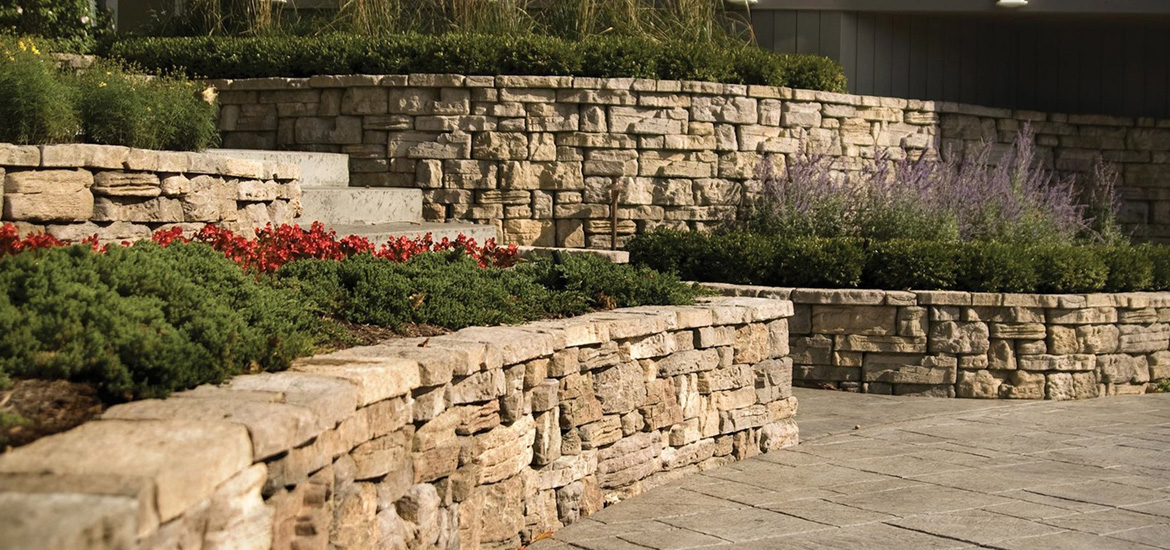
In our industry, completing projects that will last is far more important than having a blueprint based solely on design. Retaining walls serve a purpose that can really benefit the space when it comes to keeping everything where it needs to be, and it is because of this that it’s crucial for a retaining wall to be built the right way. Here are some tips and tricks to keep in mind as you build and maintain your retaining wall.

Keep Your Wall Short & Stout.
As you build your retaining wall, the laws of physics come into play and unfortunately cannot be ignored. When designing your wall, it’s in best practices to keep your wall short, within the 3-4 foot height range. As your wall gets taller, your wall also becomes less sturdy. The retaining wall’s top priority is to keep soil back and in place, which can be compromised if the wall is not built properly. If you are looking to build a retaining wall higher than 5 feet, a building permit and more strategic, mathematical planning is required.

Plan Accordingly With Your Greenery.
Choosing the type of greenery, whether it be shrubs, plants, or trees, that you will have near your retaining wall is a very important choice to make. We have found that shrubs that have a shallow root system that are low-growing and spreading tend to work best by retaining walls. Roots are the number one enemy of retaining walls, so making sure that wide-spreading roots stay far away from your wall should always be a top priority when making plans to build.

Invest In The Proper Supplies To Make Your Wall Last.
No one wants to spend time, money, and effort into a project that will fall apart in few years time. One aspect of a retaining wall that will help keep it sturdy is creating a proper drainage system which allows the soil to stay at a weight that the wall can manage. Another aspect of building a retaining wall is making sure you’re investing in a quality of stone that looks good, gets the job done, and will continue to get the job done for years to come.

When it comes to retaining walls, trust a company like Lafarge Fox River Stone to provide you with the supplies you need to make your walls last. For a full list of resources we supply, you can visit our website or give us a call today at (847)-888-6133.

Wednesday, March 1, 2017

Allan Block and Retaining Walls

Allan Block is a brand of Reading Rock which has 67 years of expertise in material building product expertise. The Allan Block Collection of retaining wall products gives you a choice of styles to meet your site and design requirements. All the collections can build the basic gravity wall system for smaller wall projects, or, using geogrid to reinforce the retaining wall allows taller projects to be built. 

Retaining Wall Basics
Retaining wall block can be used to construct walls that prevent the movement of the soil. Retaining walls that rely solely on their own weight to retain the soil behind them are called gravity walls. When taller wall heights are required or certain site conditions exist such as a slope above the wall, a reinforced wall is constructed.
  • Gravity Wall - a retaining wall that does not use soil reinforcement. A gravity wall has limited height because it relies on the weight and setback of the block alone to resist the soil pressures behind the wall.
  • Geogrid - a method of reinforcing an Allan Block retaining wall using a flexible mesh grid that adds significant strength and stabilizes the soil. 
Wflt sxqixrsbiuin0sdj0u0xlbzf6ofnwp 6jjhcocwf9zuuuq2 v1rbeugb lhb3pwivbnrvkwcksfilcvavcodblnkxqzevg4otppgt1zgudtddimyfkbk1crsi2bwrrbrgws
Retaining walls can fail for several reasons, but most often it’s from sub-standard materials used and lack of reinforcement. When using Allan Block, you will be using the highest quality block for your retaining wall. Any of the Allan Block Collection blocks stack well to create a smooth, fluid finish, and can be used on their own for a gravity wall or with a geogrid if extra reinforcement is needed. Every Allan Block carries with it a promise to be durable, naturally attractive, and easy to install. Choosing Allan Block guarantees you’ll have a strong, safe, reliable wall system. 

Lafarge Fox River Stone is a proud distributor of Allan Block. We’re holding an Allan Block Level 1 Contractor Certification course at our facility on Thursday, March 30th to become a Reading Rock certified installing contractor. This course is geared towards installers, foremen, and crew, but would also be beneficial to building officials and architects. Cost is $55 per attendee, and you must RSVP by Tuesday, March 22nd. Contact Lafarge Fox River Stone with any additional questions. We hope to see you there!